
Technology has made many parts of our lives easier. We can communicate instantly, manage finances online, and access services faster than ever before.
Unfortunately, the same technology that helps us stay connected is also being used by scammers.
Across Canada, authorities are reporting a growing number of fraud attempts using increasingly sophisticated tactics. Some scams now use artificial intelligence, impersonation techniques, and realistic-looking messages, making them difficult to detect.
Staying informed is one of the best ways to protect yourself and the people around you.
Here are several of the most common scams currently being reported.
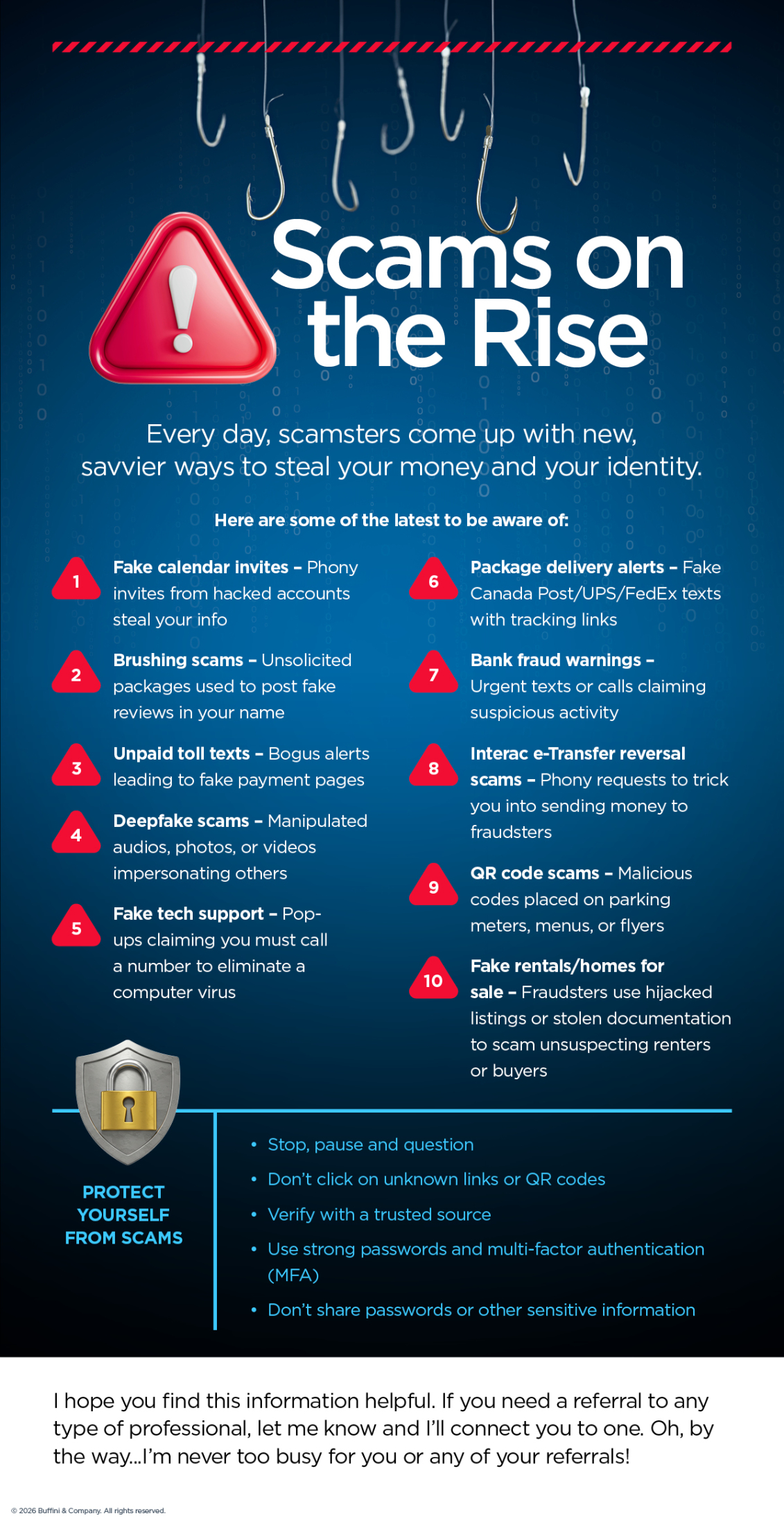
1. Fake Delivery Notifications
Many people have received text messages claiming to be from Canada Post, UPS, or FedEx saying a package cannot be delivered without confirming a link.
These messages often contain tracking links that lead to fake websites designed to capture personal or payment information.
If you receive a delivery notification you were not expecting, it is best to verify the tracking number directly through the courier’s official website rather than clicking the link in the message.
2. QR Code Scams
QR codes are appearing everywhere, from parking meters to restaurant menus.
Scammers are now placing fake QR codes over legitimate ones. When scanned, they redirect people to fraudulent websites that request payment details or login information.
Always double-check the source before scanning a QR code in public spaces.
3. Interac e-Transfer Reversal Scams
This scam often begins with a message claiming an e-Transfer was sent to you by mistake and asking you to return the money.
In some cases, the original transfer was fraudulent or will later be reversed by the bank, leaving the victim responsible for the funds they sent back.
If you receive a message like this, contact your bank before taking any action.
4. Deepfake Messages and Impersonation
Artificial intelligence now makes it possible to generate convincing audio, photos, or videos that appear to come from someone you know.
Some scams involve messages that appear to be from a friend, family member, employer, or even a company representative.
If something feels unusual, verify the request through another method, such as calling the person directly.
5. Fake Tech Support Pop-Ups
You may encounter a pop-up on your computer claiming that your device has a virus and instructing you to call a support number.
These messages are designed to create urgency and pressure you into contacting scammers who may attempt to access your computer remotely or request payment.
Legitimate technology companies do not display emergency pop-ups asking you to call them.
6. Fake Real Estate Listings
Another scam reported across Canada involves fraudulent rental or home sale listings.
Scammers sometimes copy legitimate listings or use stolen photos and documents to convince people to send deposits or application fees.
If you are looking to rent or buy a home, always verify the listing with a trusted professional or a reputable platform before sending any money.
Simple Habits That Help Protect You
While scams continue to evolve, a few simple habits can significantly reduce your risk.
Pause before responding to urgent messages.
Avoid clicking unfamiliar links or QR codes.
Verify requests directly with the organization involved.
Use strong passwords and multi-factor authentication when possible.
Never share passwords or personal financial information in response to unexpected messages.
Scammers often rely on urgency and pressure. Taking a moment to verify a request can prevent a costly mistake.
Protecting Our Community Starts With Awareness
Fraud affects people in every age group and profession. Sharing information like this can help protect friends, family members, and neighbours who may not be aware of how these scams work.
If you think this information could help someone you know, consider passing it along.
Staying informed is one of the best ways we can protect each other.
